
How to Choose a Deer Corn Feeder
Summary
Choosing the right deer corn feeder comes down to three factors: feeder type, capacity, and durability. Start with the feeder style. Gravity feeders are simple, low maintenance, and ideal for small properties or supplemental feeding. Spin-cast feeders use a timer to disperse corn and work better for patterning deer movement. If you plan to feed year-round, consider whether a protein feeder is needed instead of corn.
Capacity matters more than most hunters expect. A 200–300 pound feeder may require frequent refills if deer density is high. Larger 600–1,000 pound feeders reduce labor and keep feed consistent, which helps deer establish reliable patterns. Match feeder size to how often you can realistically service it.
Durability should not be overlooked. Look for galvanized steel legs, varmint cages, and heavy-duty lids. Raccoons, hogs, and weather will destroy cheap feeders quickly. A sturdy spinner plate and sealed electronics are critical for spin-cast models.
Finally, consider placement and regulations. Set feeders where prevailing winds carry scent naturally and always check state and local laws before deploying one.
A well-chosen corn feeder saves time, reduces waste, and improves deer activity where it counts most.
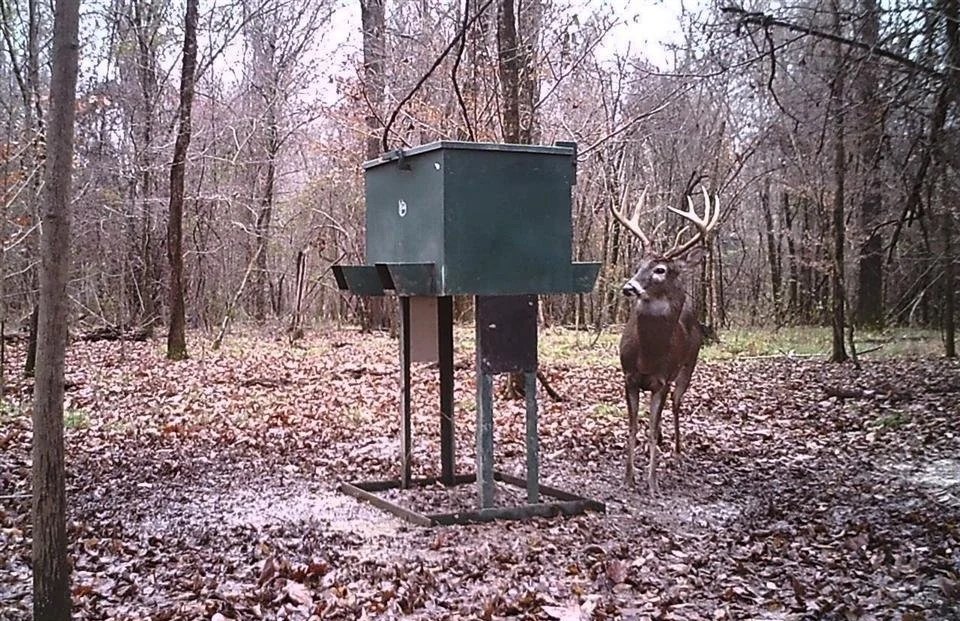
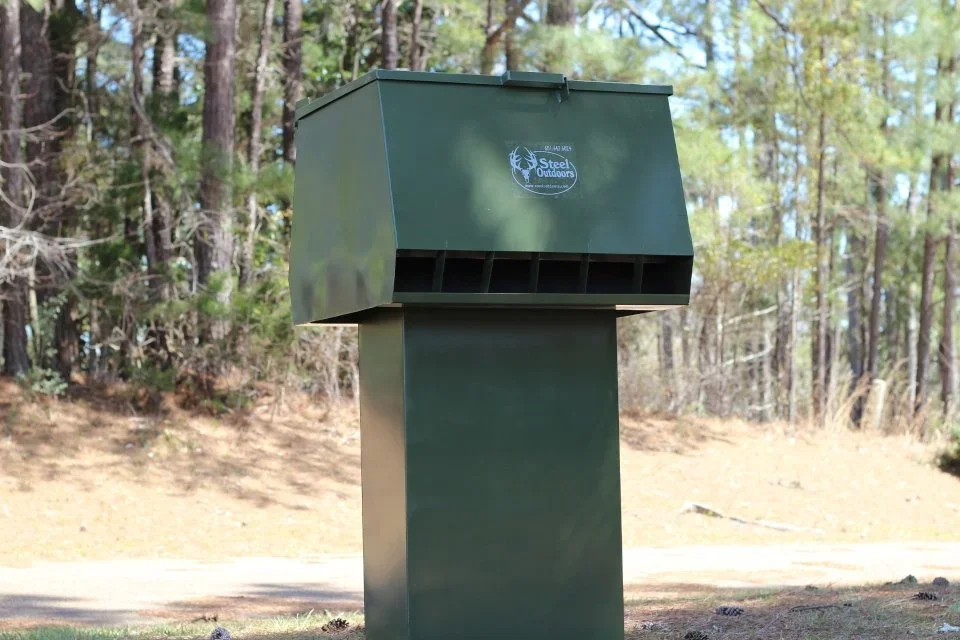
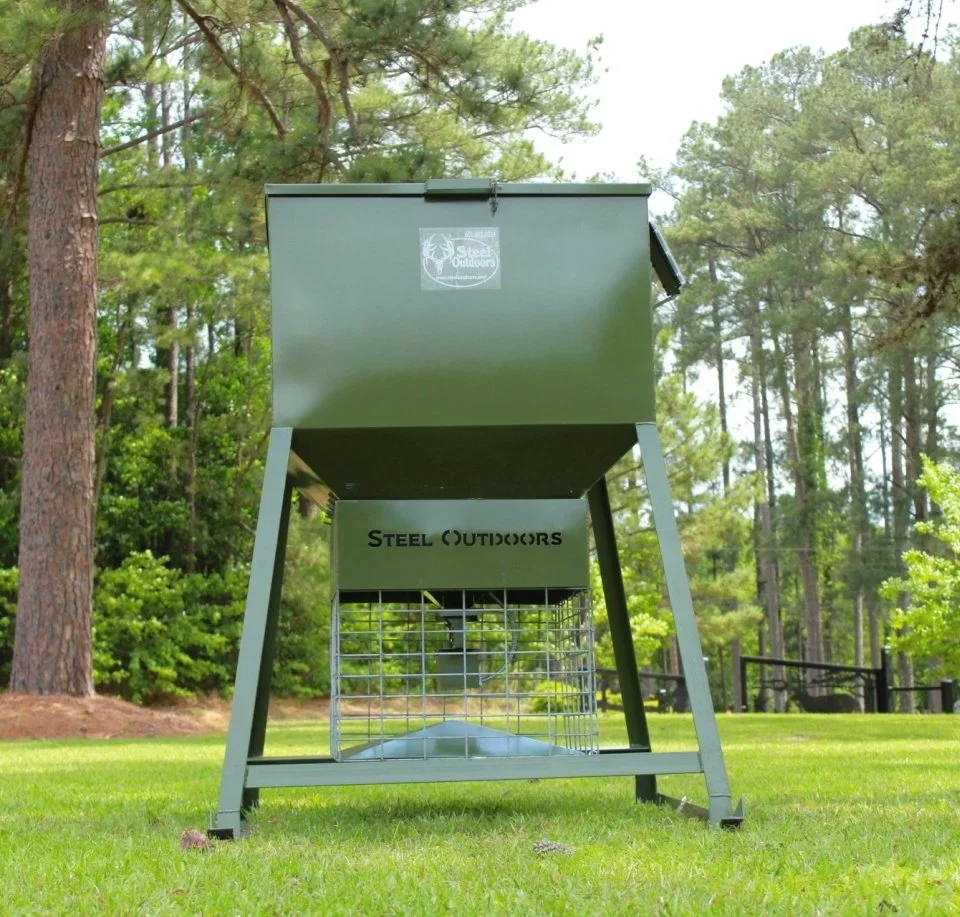
Comparing Feeder Types
| Feature | Gravity Feeders | Spin-Cast Feeders | Protein Feeders | Trough Feeders |
|---|---|---|---|---|
| How it Works | Feed falls into ports; deer eat on demand | Timed motor spins a plate to scatter feed | Gravity-fed tubes designed for pellets | Open-air or covered |
| Best Use Case | Supplemental feeding in quiet areas | Patterning deer to specific times | Max antler growth/year-round health | Herd observation & social feeding |
| Cost Range | $–$$ | $$ | $$–$$$ | $–$$ |
| Maintenance | Low (no moving parts) | Moderate (batteries, timers) | Low to Moderate | Moderate (requires cleaning) |
| Power Needs | None | 6V or 12V Battery + Solar | None | None |
| Varmint Risk | High (raccoons/hogs reach in) | Moderate (cages required) | Moderate (specialized ports) | Very High (fully exposed) |
| Recommended Feed | Corn or Protein Pellets | Corn (best for spinning) | Protein Pellets | All |
FAQ
-
The ideal size depends on how often you can visit your property.
200–300 lbs: Great for hunters who visit weekly or bi-weekly. These are easier to move and set up.
600+ lbs: Best for remote properties where you can only visit once a month. Larger capacities ensure you don't run dry and lose the deer’s pattern during the peak season.
-
A standard distance is 20 to 30 yards for bowhunting and 50 to 100 yards for rifle hunting.
Pro Tip: Consider the prevailing wind direction and the "backdrop." You want to ensure you have a clear shooting lane and that the deer aren't constantly looking directly at your blind when they approach the feeder.
-
It depends on your goal:
Corn: Best for "attraction" and patterning deer during hunting season. It's high in carbohydrates (energy) which deer crave in the winter.
Protein: Best for "supplemental nutrition" and antler growth. Use protein pellets in the spring and summer (the "growing season") to help bucks reach their full potential and improve overall herd health. Many hunters use a mix of both.
Next Steps
If you would like to know more about how to grow revenue in your hunting business, check out other resources provided by Acre:
The Modern Hunting Outfitters Digital Playbook: How to Turn Clicks into Bookings
Earn More Money Without Adding More Work
How to Book More Hunts: 8 Website Tweaks for Outfitters
How to Set Up a Deer Camp Cabin
Why Corn, Fuel, Lumber and Steel Prices Matter to Hunting Outfitters
Shop Deer Corn Feeders at Steel Outdoors
100% American-Made Steel Products Made by Hunters, For Hunters
